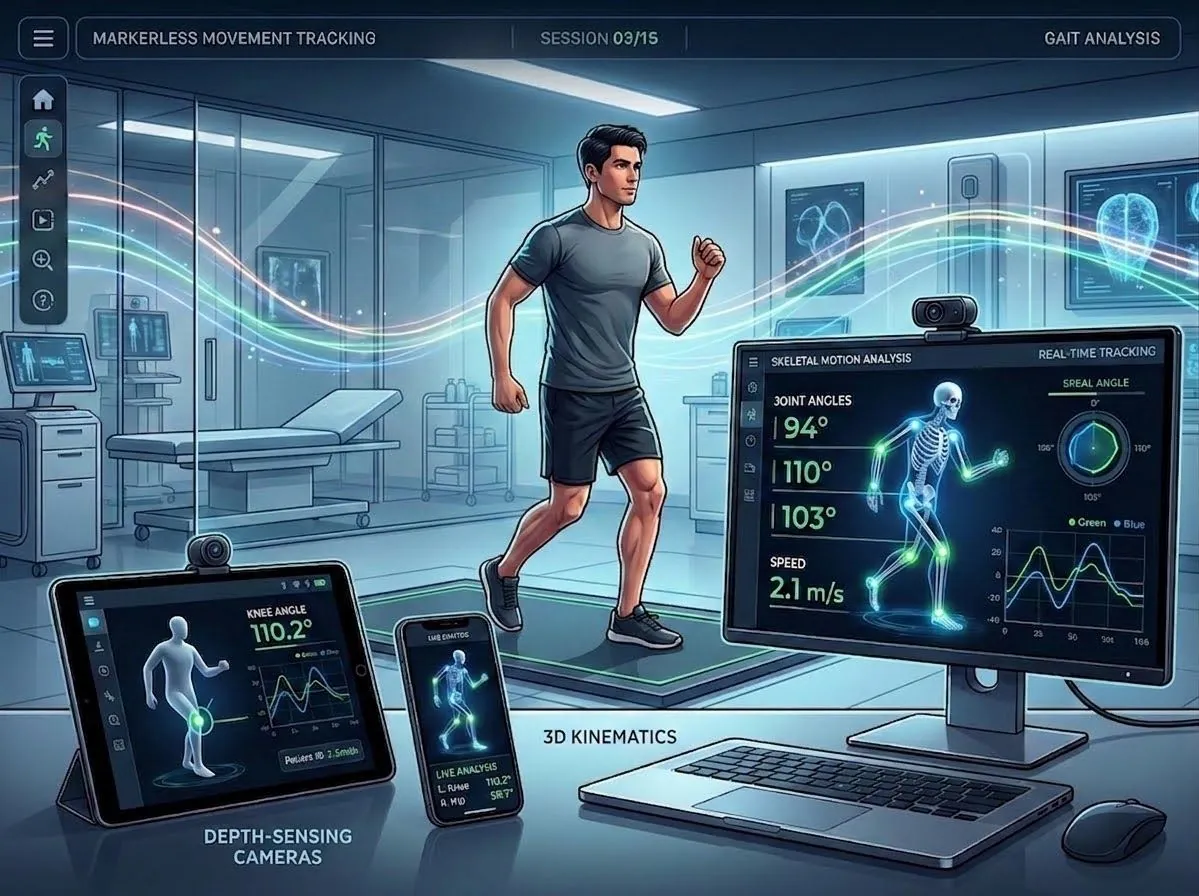
DigiGait · gait cycle
Camera-based · rehabilitation · neurology · MSK
DigiGait
Laboratory-style gait analysis from a smartphone video.
DigiGait turns a short walking video into a full gait report: spatiotemporal measures and joint kinematics across the gait cycle. Clinicians can track recovery, spot compensation and compare left and right sides without markers, force plates or a gait lab.
What it measures
- Gait speed
- Cadence
- Step and stride length
- Stance and swing phases
- Double support time
- Left/right symmetry
- Hip, knee and ankle angles
Used for
Stroke, Parkinson's, multiple sclerosis, knee replacement and MSK recovery, falls clinics, sport and performance.
Camera-based · healthy ageing · frailty · surgery
DigiSTS
Sit-to-stand testing, timed and analysed automatically.
Rising from a chair is one of the most telling everyday movements. DigiSTS automates standard sit-to-stand tests such as the Five Times Sit-to-Stand and the 30-second chair stand. It counts and times every repetition and shows how the person moves, not only how fast.
What it measures
- Total and per-repetition time
- Repetition count
- Trunk flexion
- Knee and hip extension
- Movement smoothness
- Left/right loading
- Use of arms to push up
Used for
Frailty and sarcopenia screening, healthy ageing, before and after surgery, remote monitoring and clinical trials.
Camera-based · falls prevention · ageing
DigiBalance
Balance assessment and fall-risk insight.
DigiBalance analyses postural sway and stability during standing and dynamic tasks. It helps clinicians identify people at higher risk of falling, target interventions and measure progress in balance training, in clinic or at home.
What it measures
- Postural sway area
- Sway velocity
- Single-leg stance time
- Centre-of-mass path
- Dynamic stability
- Progress over time
Used for
Falls prevention services, older adults, neurological rehabilitation, vestibular care and home-based programmes.
Camera-based · occupational health
DigiErgo
Workplace posture analysis from any standard camera.
DigiErgo assesses working postures and highlights ergonomic risk before it becomes injury. It scores posture against established methods such as RULA and REBA, and supports return-to-work and workplace wellbeing programmes with objective data.
What it measures
- Neck, trunk and limb angles
- RULA and REBA scores
- Time in risky postures
- Workstation set-up
- Trends over time
Used for
Occupational health teams, office and industrial workplaces, injury prevention and return-to-work pathways.
Wearable and sensor-based · continuous monitoring
DigiPA
Physical activity assessment with wearables and sensors.
Camera products show how well someone moves. DigiPA adds how much. It brings data from wearables and body-worn sensors into the same platform, so clinicians and researchers can see activity patterns across days and weeks alongside movement quality.
What it measures
- Steps and walking bouts
- Activity intensity
- Sedentary time and breaks
- Daily and weekly patterns
- Rest and activity cycles
- Change over time
Used for
Long-term conditions, rehabilitation follow-up, healthy ageing, workplace wellbeing and remote monitoring in clinical trials.
In development · discharge planning
DigiMap
Home environment assessment for safer discharge.
DigiMap uses computer vision to map a home, flag potential hazards and suggest changes, helping teams plan safer, earlier discharge and home-based rehabilitation.
Planned features
- Home mapping
- Hazard detection
- Modification suggestions
- Discharge planning support
- Caregiver view
Get notified when DigiMap launches